China Launches First Zero Carbon Sea River Container Corridor to Accelerate Green Shipping
China Launches First Zero Carbon Sea River Container Corridor.
China has officially launched its first zero carbon sea river container corridor, marking a significant milestone in the transition towards sustainable maritime logistics. By combining inland waterways with coastal shipping through a fully electric transport network, the new corridor demonstrates how decarbonising freight transport is becoming commercially achievable rather than purely experimental.
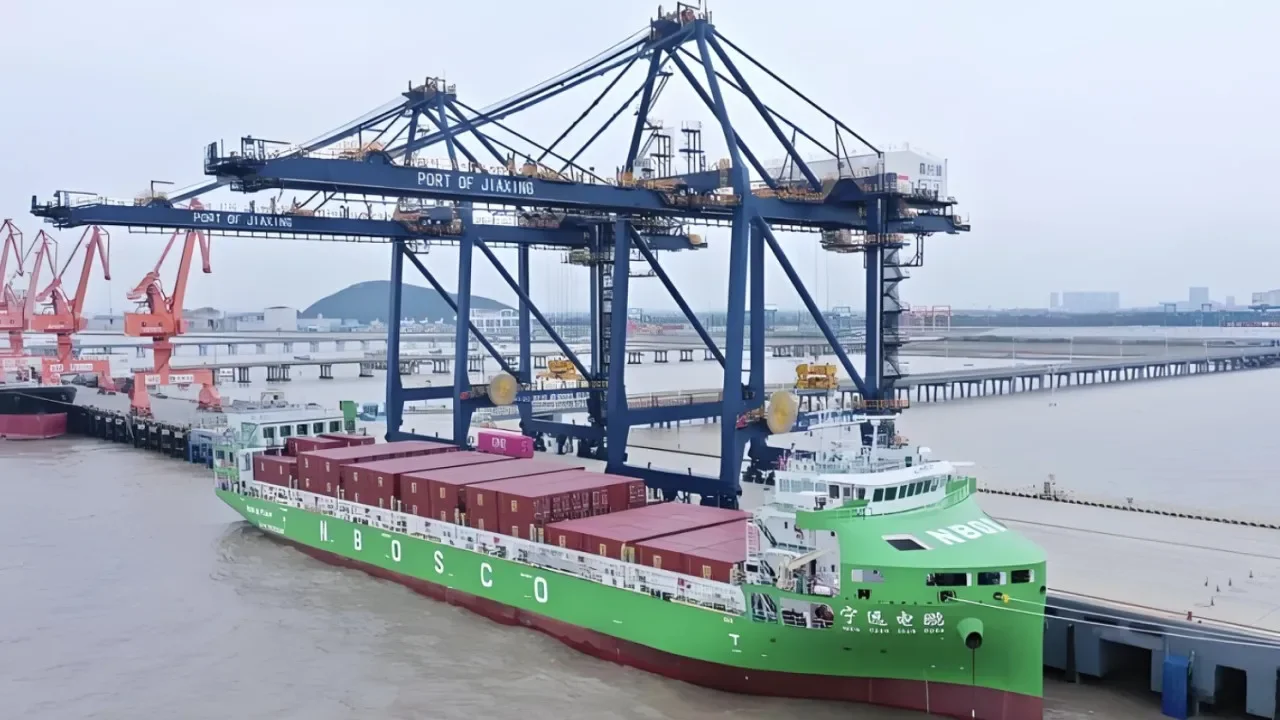
The route connects Jiaxing Port with Ningbo Zhoushan Port, one of the world's busiest container ports, using the fully electric container vessel Ningyuan Dianpeng. The project showcases how battery-powered shipping, supported by dedicated charging and battery-swapping infrastructure, can dramatically reduce emissions while maintaining reliable cargo operations.
As governments, ports and logistics providers continue investing in greener supply chains, China's latest initiative offers a practical example of how regional container transport could evolve over the coming decade.
-
Challenge
Regional container shipping still relies heavily on diesel-powered vessels, contributing to carbon emissions and local air pollution. Traditional electric vessels have also faced operational challenges due to charging times.
Solution
The Ningyuan Dianpeng was purpose-built as a 10,000-tonne fully electric container vessel operating between Jiaxing Port and Ningbo-Zhoushan Port.
Key features include:
Capacity of 742 TEU
Approximately 20,000 kWh battery capacity
Battery swapping alongside shore charging
Simultaneous battery replacement during cargo handling
Integration into a fully electric logistics corridor
Results
The project is expected to deliver measurable environmental benefits each year:
Around 800 tonnes less fuel consumption
More than 2,000 tonnes of CO₂ emissions avoided
Elimination of sulphur oxide emissions
Elimination of nitrogen oxide emissions
Reduced particulate pollution around ports
This demonstrates that zero-emission shipping can be commercially deployed on regional routes without sacrificing operational efficiency.
What is China's zero carbon sea river container corridor?
China's zero carbon sea river container corridor is an integrated freight transport network that allows containers to move between inland manufacturers and international shipping terminals using electric-powered transport with virtually no direct operational carbon emissions.
Unlike conventional logistics routes that depend on diesel-powered vessels, the corridor combines:
Fully electric container ships
Electric inland waterway transport
Shore-side charging facilities
Battery-swapping technology
Zero-emission port operations
Together, these technologies create one of the world's first commercially operating zero-carbon sea-river container logistics systems.
What makes this project different?
Unlike many green shipping announcements that focus on future fuels or prototype vessels, China's corridor is already operational.
The project combines:
Electric trucks
Electric inland vessels
Electric sea-going container ships
Battery swapping infrastructure
Shore-side charging
A continuous zero-emission transport corridor of roughly 330–350 km
That makes it one of the world's first examples of a fully integrated zero-carbon container logistics ecosystem rather than a standalone vessel demonstration.

How battery swapping is changing electric shipping
One of the corridor's most innovative features is its dual energy replenishment system.
Instead of waiting several hours for batteries to recharge, the ship can replace depleted battery containers with fully charged units while cargo is simultaneously loaded and unloaded.
This approach delivers several operational advantages:
Minimal additional port time
Improved vessel utilisation
Greater schedule reliability
Reduced emissions during port operations
Increased flexibility for regional shipping services
Battery swapping is increasingly being viewed as one of the most practical solutions for short-sea and inland shipping, where vessels operate predictable routes with frequent port calls.

The challenge
Regional container shipping remains heavily dependent on diesel-powered vessels, contributing significantly to greenhouse gas emissions and local air pollution. While battery-electric propulsion has shown promise, long charging times have historically limited its commercial viability.
The solution
China addressed this challenge by developing a purpose-built electric container vessel supported by dedicated charging and battery-swapping infrastructure.
Rather than relying solely on shore power, batteries can be exchanged during normal cargo handling, allowing the vessel to continue operating without lengthy charging delays.
Expected results
According to project operators, the corridor is expected to deliver measurable environmental benefits each year, including:
Around 800 tonnes of fuel saved annually
More than 2,000 tonnes of CO₂ emissions avoided
Elimination of sulphur oxide emissions
Elimination of nitrogen oxide emissions
Reduced particulate pollution in port areas
The wider corridor is also expected to reduce carbon emissions by approximately 60 kilograms per container, with annual savings estimated at nearly 4,800 tonnes of CO₂ as operations expand.
For the maritime industry, this represents one of the clearest examples to date that zero-emission regional container shipping can operate on a commercial scale.
Why this project matters for global logistics
Shipping accounts for approximately 3% of global greenhouse gas emissions, making decarbonisation one of the industry's greatest challenges.
Much of the current focus has centred on alternative fuels such as methanol, ammonia and hydrogen for deep-sea shipping. However, battery-electric propulsion is emerging as a highly practical solution for shorter regional routes where charging infrastructure can be strategically deployed.
China's new corridor demonstrates that electric shipping is moving beyond pilot projects and becoming a commercially viable logistics solution.
As more ports invest in charging infrastructure and battery-swapping technology, similar zero-emission corridors could begin appearing across Europe, North America and other major trading regions.

Industry perspective
China's latest initiative is not simply about launching another electric vessel.
It demonstrates how governments, ports and private industry can work together to develop an integrated zero-carbon logistics ecosystem.
According to clean shipping specialists involved in similar infrastructure projects, electrification is most effective when vessel operations and energy infrastructure are developed together.
As Wah Kwong NatPower explained during the development of other inland electric shipping projects:
"Electrification is the most direct route to decarbonising inland waterways, but it only works when energy infrastructure and vessel operations are developed together."
That philosophy is reflected throughout China's new sea-river corridor, where charging infrastructure, battery-swapping technology and vessel design have all been developed as a single integrated system.

What does this mean for UK importers and exporters?
While the project is located in China, its impact extends well beyond Asia.
Many UK businesses are facing increasing pressure to reduce supply chain emissions as customers, investors and regulators place greater emphasis on environmental reporting.
Developments such as China's zero carbon shipping corridor demonstrate that low-emission freight solutions are becoming commercially viable, particularly for regional transport networks.
Although battery-electric propulsion is unlikely to replace conventional deep-sea container shipping in the immediate future, it could significantly reduce emissions across feeder services, inland waterways and port operations.
For freight forwarders and logistics providers, projects like this also signal the direction of future investment. Businesses that understand emerging technologies today will be better positioned to support customers as sustainability becomes an increasingly important factor in supply chain decision-making.

Final thoughts
China's first zero carbon sea river container corridor represents an important milestone in sustainable shipping. Rather than showcasing a single piece of technology, the project demonstrates how electric vessels, charging infrastructure and battery-swapping systems can work together to create a commercially viable, low-emission logistics network.
As the global shipping industry works towards ambitious decarbonisation targets, initiatives like this provide valuable insight into how future freight transport could evolve. While deep-sea shipping continues to explore alternative fuels, regional electric shipping is already proving that meaningful emissions reductions can be achieved today.
Call 01274 008082
✈
Email Info'arcforwarding.com
🚢
Call 01274 008082 ✈ Email Info'arcforwarding.com 🚢
Frequently Asked Questions
-
A zero carbon sea river container corridor is a freight transport route that connects inland waterways and coastal shipping using electric vessels and supporting infrastructure to eliminate direct carbon emissions during operations.
-
The corridor operates between Jiaxing Port and Ningbo Zhoushan Port in eastern China.
-
The route uses the Ningyuan Dianpeng, a fully electric container vessel capable of carrying 742 TEU.
-
Battery swapping allows ships to replace depleted batteries with fully charged units while cargo is being loaded, reducing downtime and improving operational efficiency.
-
Electric vessels are currently best suited to regional and short sea routes. Long distance container shipping is more likely to use alternative low carbon fuels such as methanol, ammonia and hydrogen until battery technology advances further.