
How the EU Carbon Border Tax Will Impact UK Importers
The Carbon Border Adjustment Mechanism (CBAM) is a significant new climate policy from the European Union designed to reduce carbon leakage, the shifting of emissions-intensive production to countries with weaker climate rules. It creates a carbon price on certain imports, ensuring they face similar costs to goods produced within the EU.
For UK businesses involved in importing or exporting carbon-intensive goods, understanding CBAM is becoming essential to trade planning, compliance, and cost forecasting.
What Is CBAM?
The EU’s CBAM is a carbon border tax that targets carbon-intensive imports to the bloc. Initially launched in a transitional phase, it is now entering its definitive phase, meaning financial obligations will apply to relevant goods.
CBAM aims to:
Prevent carbon leakage by aligning the carbon cost of imported goods with EU domestic carbon pricing under the EU Emissions Trading System (EU ETS).
Provide a level playing field for EU manufacturers that already face carbon pricing pressures.
Goods and Sectors Covered
CBAM initially targets goods from sectors that are:
Highly industrial and carbon-intensive
At significant risk of carbon leakage
-
Iron and steel
Cement
Aluminium
Fertilisers
Hydrogen
Electricity (depending on carbon pricing differences)
Goods must be assessed for embedded emissions, the carbon released during their production, to determine the appropriate CBAM certificate obligation.

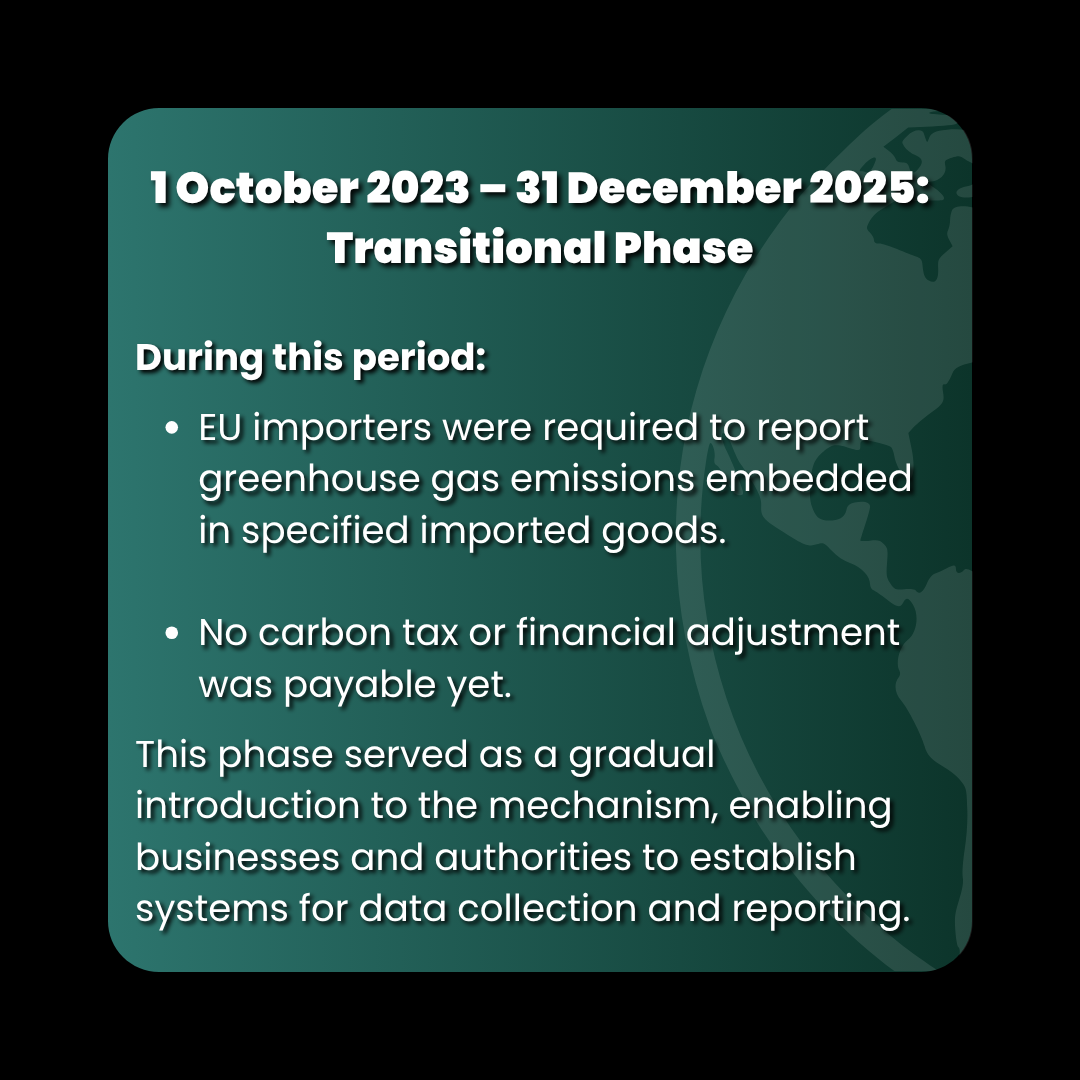
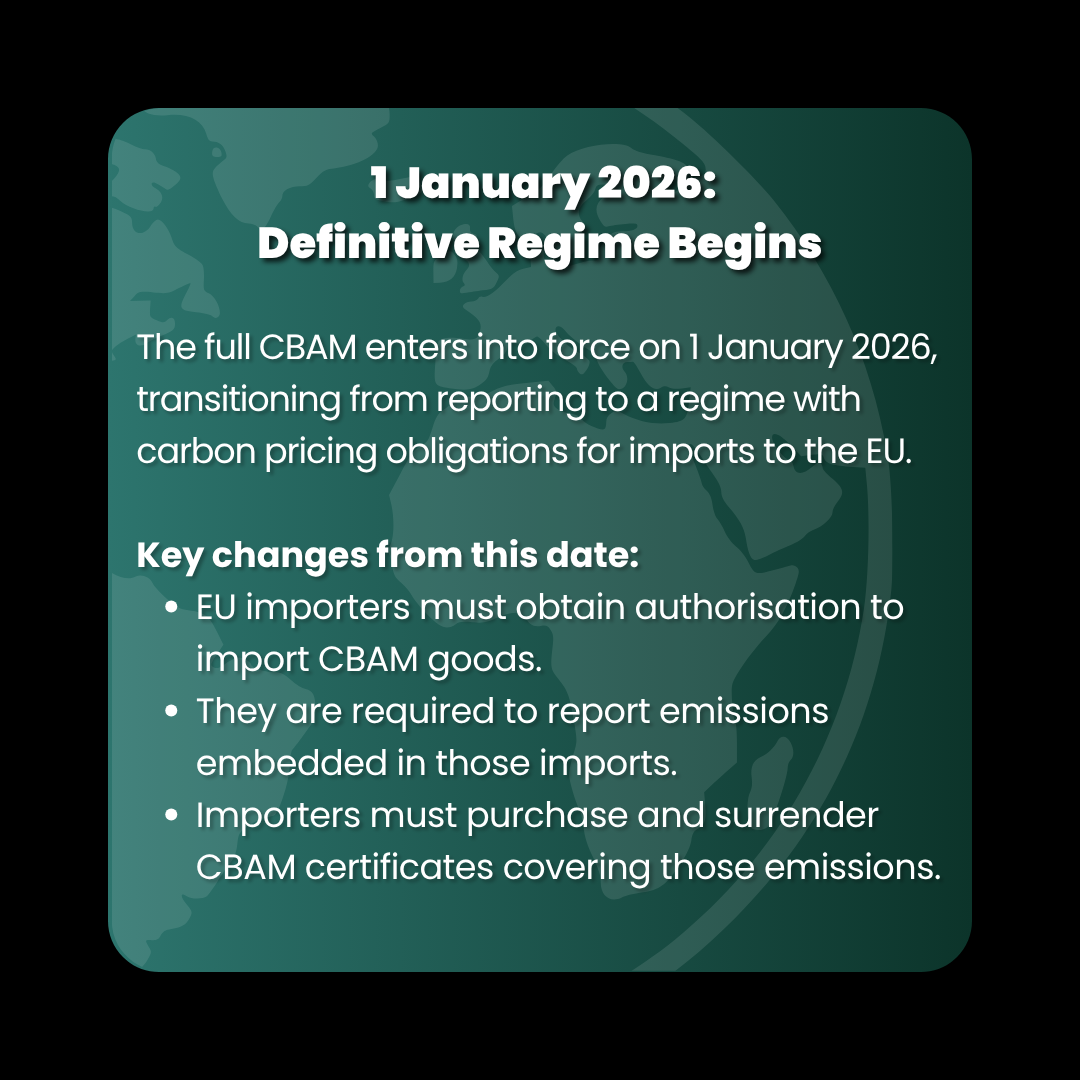
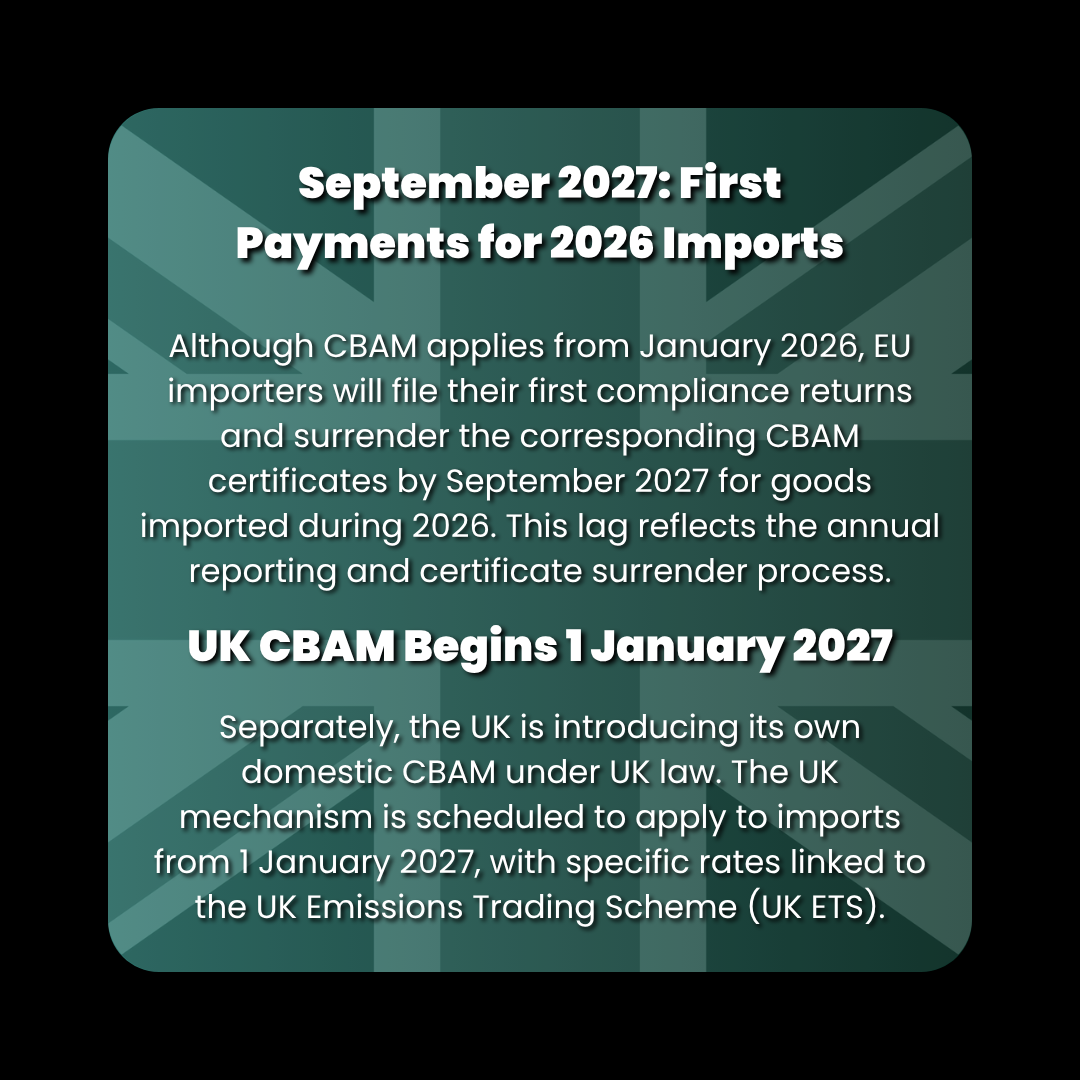
Timeline: When CBAM Takes Effect



How CBAM Impacts UK Importers
Even though CBAM is an EU mechanism, UK importers and exporters still need to prepare. Here’s why:
-
EU importers must comply with CBAM obligations, but UK suppliers exporting goods into the EU may be asked to provide verified emissions data and evidence of any carbon price paid outside the EU.
This means UK businesses may need to:
Track and report embedded emissions in their products
Provide data to their EU customers for compliance purposes
Adjust contracts and supply chain documentation to include emissions information
-
Large volumes of emissions data and supporting documentation will be required, increasing administrative workloads, particularly for companies without existing carbon accounting systems.
-
Although EU importers directly pay for CBAM certificates, they may pass associated costs back to UK suppliers in pricing negotiations, affecting competitiveness and margins.
-
The EU has not granted a temporary exemption for UK businesses under CBAM unless the UK ETS and EU ETS are linked, a process that may take over a year or more.

Practical Steps for UK Businesses
-
Identify whether your products are within the initial CBAM scope and calculate potential emissions liability.
-
Begin internal carbon accounting or work with suppliers to collect emissions data at source.
-
Ensure your EU partners have access to accurate emissions documentation to satisfy their compliance requirements.
-
Account for possible carbon costs being factored into future pricing strategies or supply agreements.
Resources and Further Reading
For detailed guidance, consult these trusted sources:
Information from the EU Taxation and Customs Union on CBAM rules and implementation.
Guidance on CBAM’s EU implementation from Business.gov.uk tailored for UK firms.
The UK Government’s CBAM factsheet outlining the UK’s approach to its own mechanism.

Final Thoughts
CBAM represents a major shift in international trade policy, with implications for carbon pricing, supply chain reporting, and competitiveness for UK importers and exporters. While the primary compliance obligation sits with EU importers, UK businesses will increasingly need to provide emissions data and adapt commercial processes.
Understanding these requirements now can help reduce compliance risks, avoid delays at EU borders, and maintain strong market links with European partners.
Call 01274 008082
🚢
Email Info@arcforwarding.com
✈️
Call 01274 008082 🚢 Email Info@arcforwarding.com ✈️
Supporting FAQs
-
No. CBAM currently applies only to selected carbon-intensive goods, including iron and steel, cement, aluminium, fertilisers, hydrogen, and electricity. The scope may expand over time as the EU reviews additional sectors.
If you trade in products that fall outside these categories today, you should still monitor developments, as future phases may include more commodities.
-
No. CBAM charges are paid by EU importers when goods enter the European Union.
However, UK exporters supplying EU customers will often need to provide accurate emissions data and supporting documentation. In many cases, CBAM-related costs may be reflected in commercial pricing.
-
CBAM certificates are digital certificates that importers must purchase and surrender under the Carbon Border Adjustment Mechanism (CBAM). They reflect the carbon emissions embedded in certain imported goods, helping ensure imported products face a similar carbon cost to goods produced within the EU. Importers will need to declare emissions and submit the corresponding number of CBAM certificates each year.
-
Embedded emissions are calculated based on:
Direct emissions generated during production
Indirect emissions linked to electricity used in manufacturing
Producers are expected to use verified emissions data where possible, following EU-approved methodologies.
-
If accurate data is not provided, EU authorities may apply default values, which are often higher than actual emissions. This can increase the number of CBAM certificates required, raising overall costs.
Providing verified data is therefore strongly recommended.
-
Potentially, yes. Additional reporting and documentation requirements may increase administrative checks. Incorrect or missing information could lead to delays.
Working with experienced customs and freight partners helps reduce this risk.
-
Yes. The UK has announced its intention to introduce a UK Carbon Border Adjustment Mechanism from 1 January 2027, aligned with the UK Emissions Trading Scheme.
Further details on scope and administration are expected from the UK Government.